Category: Real-time

icon

There are people who create content. Millions of them, producing enormous amounts of data and information every day. On the opposite side, you have the consumers, people who absorb most of this content for various reasons. And there are those in-between, an emerging layer of people who filter this content and pass the one worth consuming forward to others. These people are called content curators, a breed that's becoming more and more important these days, perhaps even more important than the original creators themselves. After all, they're the ones categorizing and cleaning up the chaotic Web.

...more
Comment
written 18:04 CET on chronolog
600 views   •   2 comments  •   Like   •   
date
date
date
date
icon

Supporting events on Twitter is becoming very popular, and it's a perfect case study of what Twitter can do. After all, this channel allows an additional layer for following things that are going on in real-life, in real-time. Coverage sometimes happens accidentally, if there are enough Twitterers around, but more and more often, it happens as a result of a carefully planned tactic of those behind the event. Only then it can fully work, enabling organizers, participants and observers a totally new type of involvement. Crowdsourcing event support can produce a better overview of what's happening than any well-trained team of journalists can provide, offering an experience that is broad, objective and subjective, interactive. And like using Twitter itself, some know how to do it, and some don't.

...more
Comment
written 11:13 CET on chronolog
2518 views   •   2 likes   •   4 comments  •   Like   •   
date
date
date
date
icon

I started writing about Facebook and Twitter because I saw these two services as the most impressive players of the social age. I received a lot of comments about the two of them not being comparable, which I disagree. They are the biggest global Web 2.0 platforms (LinkedIn successfully went public and has a lot of users, but it's hardly a platform) and two of the ten most visited websites in the world. They are social trend-setters, both super advanced on technical and conceptual levels. They are a lot, but with the latest sets of patches, they are also becoming a lot alike.

...more
Comment
written 9:22 CET on chronolog
429 views   •   1 like   •   Like   •   
date
date
date
date
icon

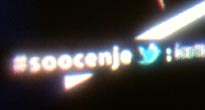
About two months ago I was super fascinated about the fact that a variety of Slovene marketers started to promote their Facebook presence on billboards. Guess what: that's so two months ago. Šport TV, one of the biggest sports television networks in Slovenia went a step further, designing their billboard(s) specifically for promoting their coverage of The European basketball championships on Twitter. Which is a bit surprising, since there are supposedly only around 10k people on Twitter in Slovenia (compared to 650k on Facebook), but still, Twitter is much more suited for media coverage than Facebook for various reasons.

...more
Comment
written 21:59 CET on chronolog
852 views   •   3 likes   •   2 comments  •   Like   •   
date
date
date
date
icon

The bookmarking service Delicious has had an interesting life. It was one of the first social services available, later bought by Yahoo and almost canceled, then being sold to Avos about a month ago. Avos was founded by the same people who've created YouTube (Chad Hurley and Steve Chen), and these guys obviously know what they're doing. A few days after acquiring Delicious, Avos also bought a social media analytics startup Tap11, and here's what they had to say about it:

...more
Comment
written 18:03 CET on chronolog
343 views   •   1 like   •   1 comment  •   Like   •   
date
date
date
date
icon

The great revolution of Web 2.0 is still here and well – it looks like it's not going anywhere. Actually, its name did change, making "social media" more widely used today, but I'm still sticking to the original Tim O'Reilly's term. It's been more than five years since that happened, and a few years ago Web 3.0 was also starting to get mentioned. Web 3.0 mainly stands for the semantic web, using mathematical algorithms and meta data for trying to understand the meaning of content. But the whole thing is getting kinda old, because we still didn't see any real great results or services online – or perhaps they just did not make it to the mainstream. So while we wait for that to unveil, we could discuss something in between.

...more
Comment
written 18:39 CET on chronolog
302 views   •   2 likes   •   2 comments  •   Like   •   
date
date
date
date
icon

After my previous post comparing Facebook and Twitter I received a few comments about how Facebook and Twitter are two totally different services which can't really be compared. I admit they are not perfectly analog, but my thoughts originate mainly from the fact that these two players will probably be those who'll define how the social web of tomorrow will look, from the point of user experience as well as an organizational and marketing tool. Where Google dominates Web 1.0, Facebook and Twitter are obviously becoming the leaders of Web 2.0, and the fact is any of them (including Google) has a good chance to define Web 3.0.

...more
Comment
written 18:11 CET on chronolog
373 views   •   4 likes   •   3 comments  •   Like   •   
date
date
date
date